
Building the Surf Camp Booking Tool He Wished He Had
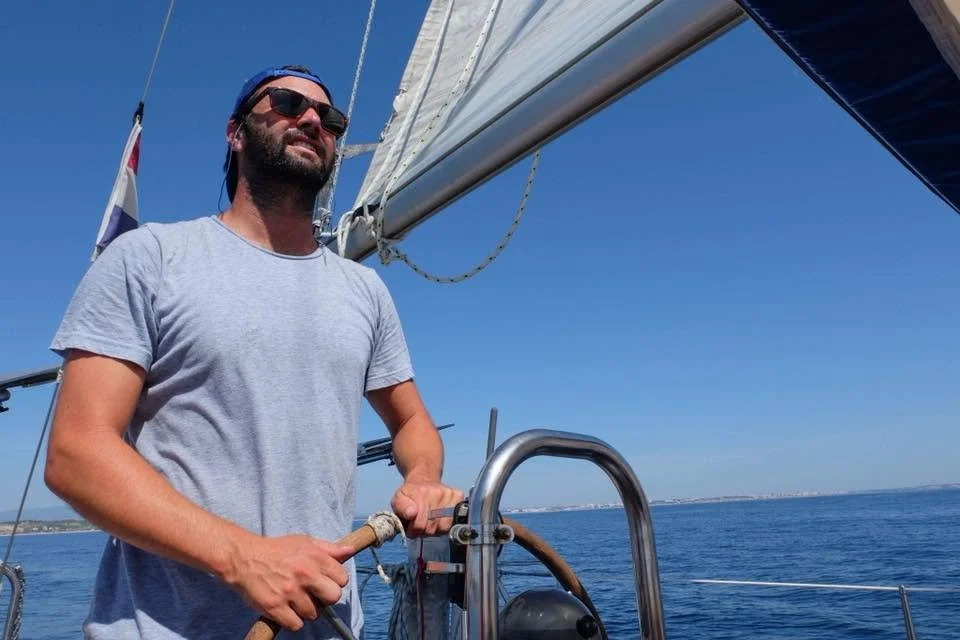
Jose at the helm
How José Paralta turned 18 years inside surf camps into Hightide, a booking and operations platform built for the real rhythm of retreats, camps and ocean-based businesses.
For José Paralta, Hightide was not a random startup idea. It was a problem that had followed him for nearly two decades. After 18 years working in, managing and owning a surf camp in Portugal, José had seen first-hand how far behind the booking process was for surf camps and retreat businesses compared with the wider tourism industry.
Surf camps were selling accommodation, lessons, packages, rentals, extras and experiences (often all at once) but the systems available rarely matched how those businesses actually worked. José had studied tourism, had always been interested in tech, and kept coming back to the same thought: There had to be a better way.
Today, José is the founder of Hightide, a booking and operations platform built for surf camps, yoga retreats and experience-based businesses that need to manage accommodation, activities, packages, extras, payments, channels and guest communication in one place. He also owns Villa Boho, a boutique guesthouse in Lagos, Portugal.
But the journey from surf camp operator to solo software founder was anything but quick. In fact, Hightide took about 15 years to fully come back to life.
The Idea That Wouldn’t Go Away
José first tried to build Hightide almost 15 years ago as a startup with three members. The idea was there. The need was there. But like many early-stage projects, the team struggled to find a roadmap that made sense for everyone. The first version of Hightide didn’t survive. But the problem stayed with him.
“I always felt like the booking process for these businesses was very far behind the rest of the tourism industry,” José says.
That lived experience became important later. Hightide was not built from the outside looking in. It was built by someone who had actually dealt with the daily reality of surf camp operations: the arrivals, departures, surf lessons, yoga sessions, accommodation availability, guest communication, booking changes, payments and admin.
Ten years after that first attempt, José decided to go deeper into tech. He learned Python and web development, and eventually built Hightide again — this time as a solo developer and founder.
The spark came during his web development course. For his final project, José had to build a small application. Hightide had never really left his mind, so he decided to create a very simple version of the idea. But once he started planning it, something shifted.
“I remember having a moment where I realised that I could probably build the whole thing with the knowledge that I currently gained from the course,” he says.
What was supposed to be a one-month final project became something much bigger. José remembers telling his girlfriend, now his wife, that the project taking up all his time would probably turn into a two-year business-building mission. It ended up taking three.
“It was a risky move to invest this amount of time before it could actually become a business, but thankfully, she supported my decision,” he says.
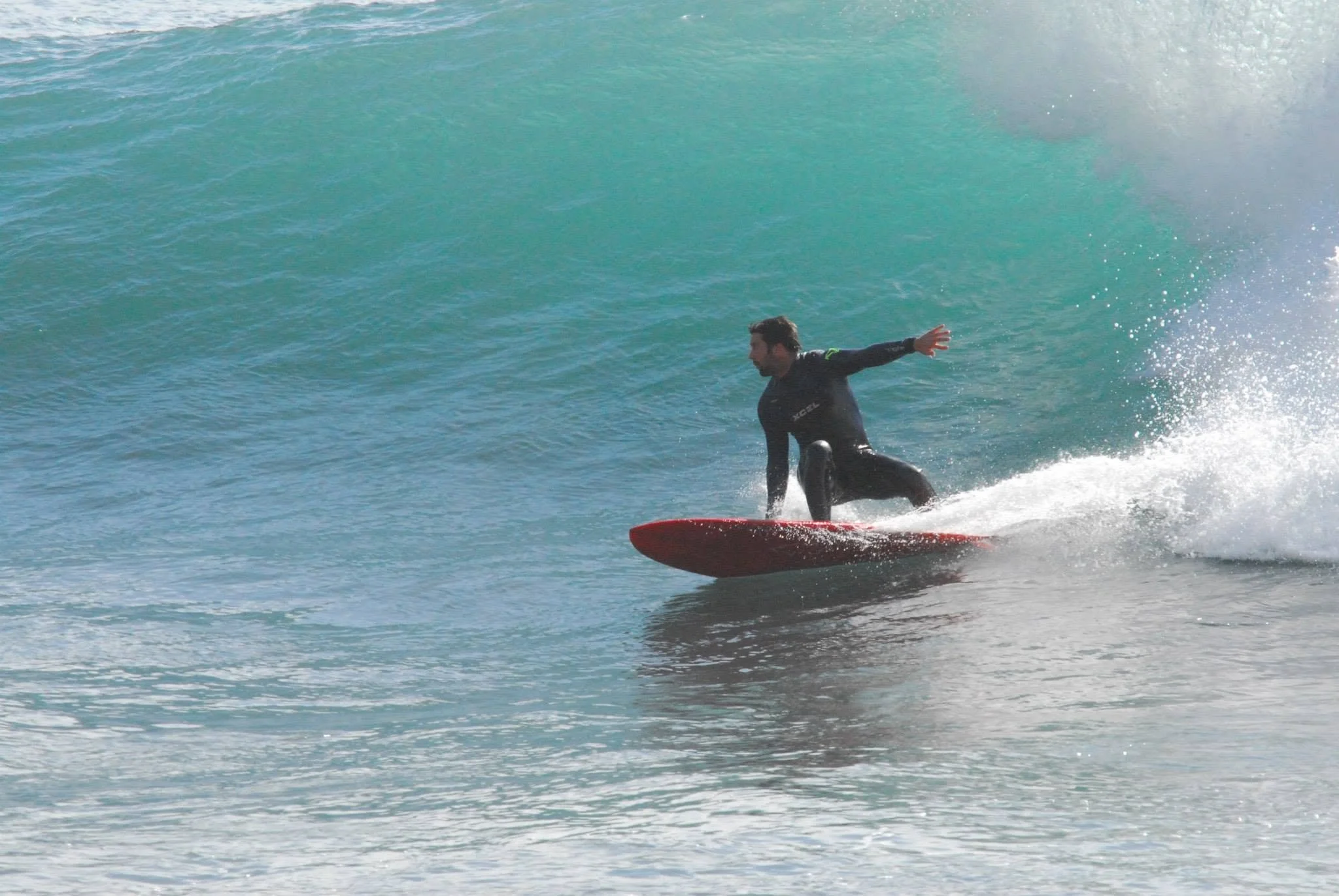
Jose driving into the next section
Building From Inside the Problem
One of the clearest strengths of Hightide is that it was built from within the surf camp world, and José understands the problem because he lived it. That matters because surf camps and retreat businesses are not always simple accommodation providers. They often sit somewhere between hospitality, tourism, education, adventure, wellbeing and community.
A single booking might involve a room, airport transfer, board rental, surf lessons, yoga, meals, activities, extras and different arrival or departure dates. Traditional booking tools can work well for hotels. Other platforms work well for tours or activities. But many surf camps sit in the messy middle. That is the gap Hightide is trying to solve.
Today, the platform includes a visual calendar for managing accommodation, activities and availability; booking management with search, filtering and reporting; a day planner for arrivals, departures, surf lessons, yoga sessions and other daily operations; a customizable online booking website with zero commission; automated guest emails; Stripe and PayPal integrations; channel management; invoicing; reporting; and business management tools.
But José is clear that the feature list is not the main point.
“What I’m most proud of isn’t any individual feature,” he says. “It’s that Hightide remains simple to use while giving surf camps and activity businesses the flexibility to manage accommodation, lessons, rentals, packages, extras and add-ons from a single calendar and system.”
That balance of powerful enough for complex operations, simple enough for busy operators is central to what he is building.

Jose inside
From Product Trial to Problem Solving
Hightide is now in its first year as a public product. After years of development and working closely with early adopters, it has grown into a platform being used by real businesses in their daily operations. Some beta users are now entering their second full season on Hightide, while new customers continue to join. José’s core customers are surf camps and yoga retreats, but the platform is also being used by accommodation-only businesses, rental shops, dive camps, boat charters and other experience-led operators.
One of the biggest surprises has been how valuable the early consultation calls have become. José originally saw them as a way to introduce Hightide and understand potential users. But they quickly became one of the most important parts of the sales and onboarding process.
“They have become a great way to break the ice and show potential users that I actually understand their needs and have built something to help,” he says.
For many operators, the problem is not just that they need better software. It is that they are too busy to step back and understand what their booking process should look like. They know their current systems are messy. They know they are losing time. They may know they need more direct bookings. But deciding what to change, how to structure packages, how to organise availability, and how to move from old tools into a better system can feel overwhelming.
José has realised that this initial guidance can be the difference between someone signing up for another booking software trial and giving up, or finally moving away from time-hungry processes that hold their business back. That insight is shaping the next stage of Hightide.
He is now restructuring the onboarding process so each business gets more than just access to the platform. The goal is to bring in José’s experience and help customers set up Hightide in a way that actually fits their operation.
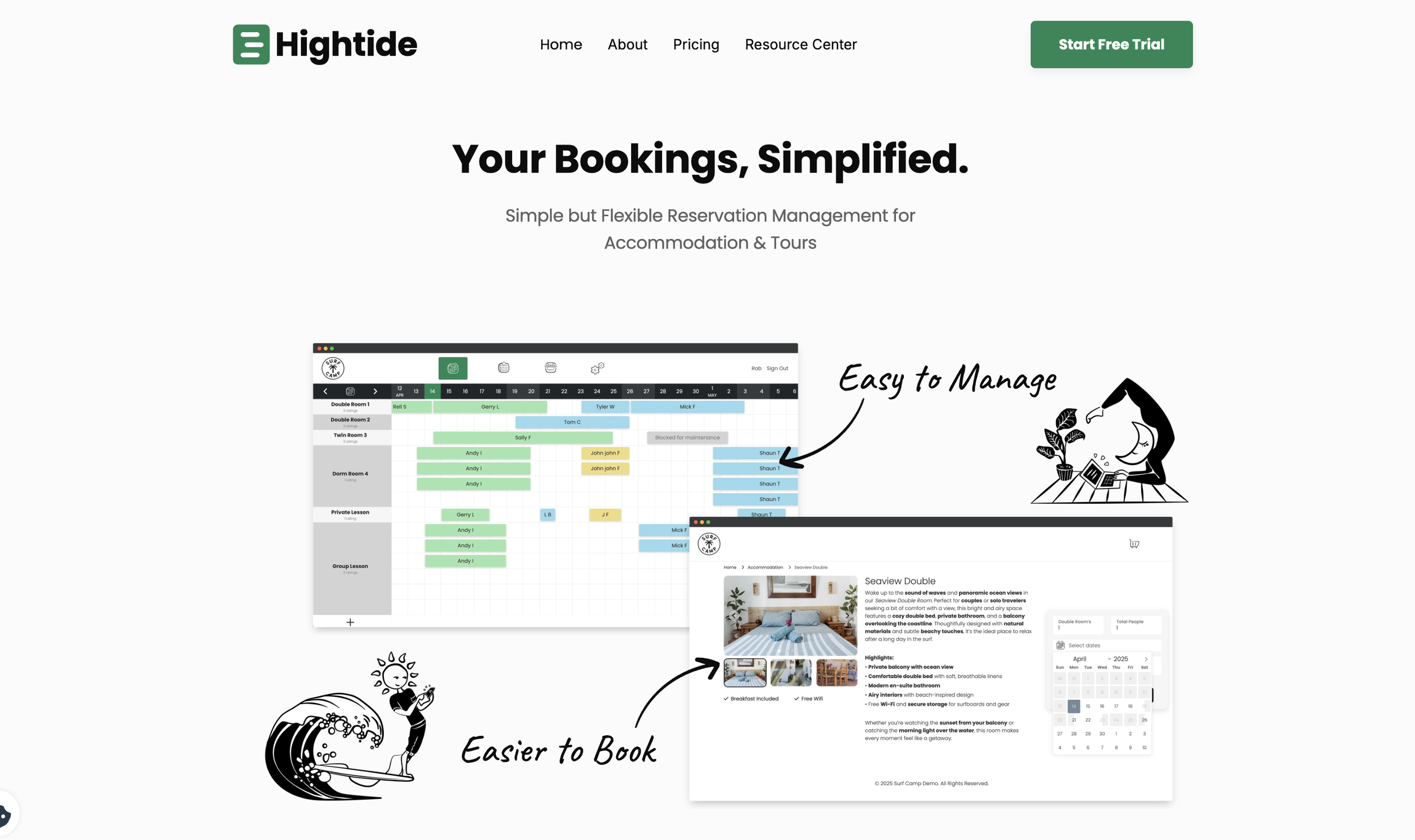
The Hightide platform
The Hardest Part: Building Before Anyone Was Using It
Many founders talk about launch day as the beginning. For José, the hardest part came before that.
“The time it took to build before I could see it in use,” he says. “Years of building something alone before anyone uses it can be daunting and brings some doubt.” That doubt was amplified by the speed of the modern tech world.
In an age where people are constantly hearing stories of teenagers building apps in a weekend and getting thousands of users almost instantly, José was still deep in the build, years into the project and not yet launched. There were moments where he wished he had chosen something smaller. But he kept going.
“I am a firm believer that to build something long-term and special requires commitment and time,” he says. That lesson will resonate with a lot of surfpreneurs.
Not every meaningful business is built quickly. Some ideas take years of lived experience before they are ready. Some products need patience, depth and stubbornness. Some problems are only worth solving if you care enough to keep coming back to them when they become difficult. For José, Hightide combines three things he genuinely cares about: surfing, business development and tech. It also satisfies something more personal.
“I am a very stubborn individual and really wanted to solve the problem I set out to solve 15 years ago,” he says.
Lessons From the Long Build
When asked what he has learned so far, José’s first lesson is simple:
“Break things into small bits, and just do the next right thing.”
The reference, he jokes, comes from Frozen (thanks to life with a three-year-old) but the lesson is practical. Big business ideas can become paralysing when seen as one giant project. This is especially true for solo founders, operators building alongside family life, or anyone trying to create something complex without a large team. Hightide could easily have felt too big to finish. A booking engine, calendar, payments, emails, reporting, channel management, onboarding and support system is a lot to build. But breaking the work down made progress possible.
Another lesson is one many founders learn later than they wish: Start talking to customers sooner.
“I would have started talking to businesses sooner,” José says. “Every person I talk to now adds a little bit more knowledge that helps me make Hightide better.”
That does not mean every idea needs to be crowd-designed. But it does mean real conversations sharpen the product, reveal blind spots, and help founders understand what customers are actually struggling with, not just what the founder thinks they are struggling with.
José’s advice to other people starting a business is equally honest:
“Make sure it’s something you’ll obsess over, in a healthy way. Because it won’t just be a job that makes you money, it will be a much bigger part of your life than you expect.”

Jose breaking it into smaller bits
Working With Your Brain, Not Against It
José is open about marketing still being one of his weaker areas. He has a website that brings in users, and Hightide has a social media presence, but it is not yet as active as he would like. His current tools are more focused on building and staying organised. Cursor has become a valuable part of his coding workflow, especially for debugging, while Notion helps him stay organised and sane.
One of his more useful working habits is learning to match tasks to his state of mind. If he is in a hyper-focused mood, he will tackle a complex feature that requires careful, focused steps. If he feels more distracted, he will switch to lighter or more superficial tasks that are less risky if his concentration is not at its best. That kind of self-awareness is often underrated.
Founders are regularly told to be disciplined, consistent and productive. But when you are building something long-term, especially alongside family and life, it can be just as important to understand what kind of work you are actually capable of doing well on a given day.
Progress does not always mean forcing the hardest task. Sometimes it means choosing the right task for the brain you have that day.
Surfing, Family and the Search for a Sustainable Business
Like many surfpreneurs, José is not building Hightide just to create more work for himself. He is trying to build something meaningful and challenging without letting it take over his whole life. That balance is still a work in progress. He has a young child and tries to keep weekends mostly for family, though he admits it is a constant challenge.
His version of a good day gives a good snapshot of the lifestyle he is working toward. After a productive workweek with good results and plenty of boxes ticked, he spent a Saturday at the beach with his family, surfing, then came home for a BBQ dinner and a movie together on the couch. Later, after everyone had gone to bed, he did a bit more work.
“This counts as marketing, right?” he joked during our interview. For José, the goal is not to escape work entirely. It is to build the kind of work that feels worth doing, while still making space for the people and lifestyle that matter.
“I feel like I’m getting closer to that sweet spot where I’m doing something meaningful and challenging without letting it take over my whole life,” he says.

Family time
Coming Out of the Coding Coma
Community has become more important to José as Hightide has moved from build mode into public product mode. For the first couple of years, he says he put his head down and coded. Now, he describes himself as slowly coming out of his “coding coma” and realising the value of connecting with other people building in similar spaces.
Through Surfpreneurs, he has already met people who have brought positive results for Hightide. But just as importantly, he has appreciated the chance to talk with others who understand the founder journey. He describes it as a kind of virtual watercooler.
That might sound simple, but for solo founders especially, it can be powerful.
A conversation with someone who understands your industry can create ideas, partnerships, encouragement and perspective. Sometimes it simply reminds you that you are not the only one trying to build something difficult. The kinds of connections José is looking for now are mutual ones: people and businesses that can help each other get closer to their goals.
“I feel like I’ve found a few already within this group,” he says.
What’s Next for Hightide
José’s next major focus is improving the onboarding process and support platform for Hightide.
As the business grows, he wants onboarding to be better for users but also sustainable for him. That means turning his hard-earned experience into a process that helps surf camps and retreats get set up properly without creating a support burden that becomes impossible to manage. Over the next 6–12 months, he is excited to keep seeing something he built become a positive part of the businesses that use it.
“Just to continue to see something I built become a positive and impactful part of the businesses that use it, and keep making it better,” he says.
For other surfpreneurs, José’s story is a reminder that some of the strongest business ideas come from problems you know intimately. It is also a reminder that building something worthwhile can take longer than expected. The first version might fail. The idea might sit in the back of your mind for years. The second attempt might take three years instead of one. You might question whether you chose something too big.
But if the problem matters enough, and if you keep breaking it into small pieces, the long build can become the thing that makes the business stronger.
José did not just build a booking platform. He built the tool he wished he had when he was busy running a surf camp. And now, Hightide is helping other surf camps and retreat businesses spend less time wrestling with admin, and more time creating the kind of experiences their guests came for in the first place.
Founder Takeaways
1. Build from lived experience.
The more deeply you understand the problem, the easier it is to build something that actually fits the customer’s reality.
2. Talk to customers earlier than feels comfortable.
Every conversation adds information that can sharpen your product, offer, onboarding and positioning.
3. Big ideas become manageable when broken into smaller steps.
When the full vision feels overwhelming, focus on the next right thing.
4. Onboarding can be part of the product.
For busy operators, guidance and setup support can be the difference between trying a tool and actually changing the business.
5. Choose a business you care enough to keep thinking about.
If it becomes a much bigger part of your life than expected, it helps if the problem genuinely matters to you.
Connect With José and Hightide
José is currently focused on helping surf camps, retreats and experience-led businesses simplify their booking systems, improve direct bookings, and reduce the admin that comes with managing accommodation, activities, packages and extras.
You can learn more about Hightide at hightide.io or follow along on Instagram at @hightide.io.