
How Luwatu Is Building a Fairer Surf Camp Booking Platform
Finding the right surf camp should feel exciting. But for a lot of surfers, it’s surprisingly frustrating.
Too many booking platforms feel opaque, overloaded with paid rankings, or disconnected from the actual surf experience. And for many local surf camps, the commissions charged by large booking platforms can be brutal.
That frustration is exactly what pushed Matthieu Baillargé, founder of Luwatu, to spend the last decade building a different kind of surf travel platform.
Based in Biarritz, France, Matthieu is creating a global surf camp directory designed around transparency, fairness, and direct discovery — with the goal of helping surfers find better surf camps while helping camps rely less on expensive third-party platforms.
And while the idea sounds simple on the surface, the reality of building a global surf booking platform as a solo founder has been anything but easy.
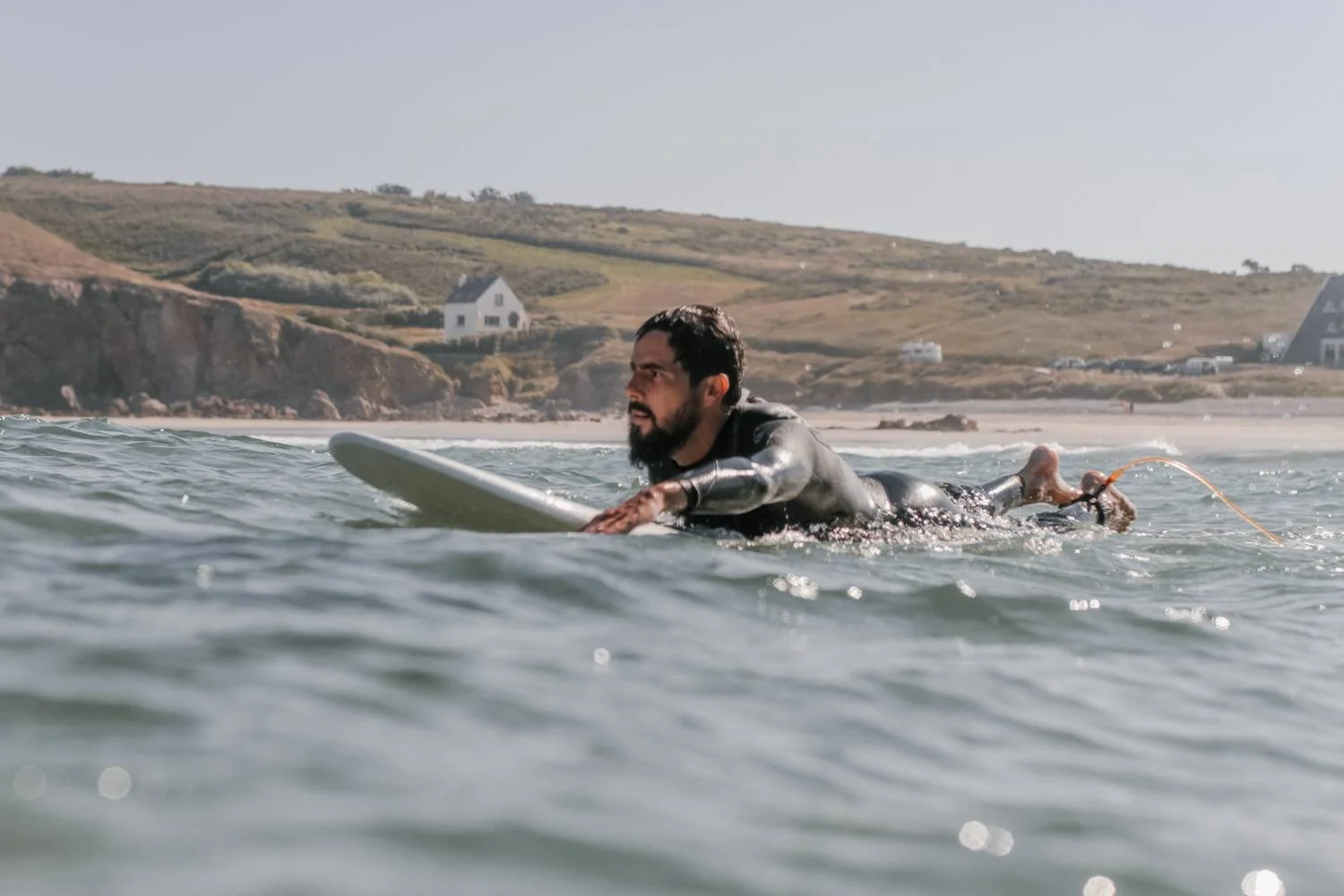
Matthieu paddling out
The Problem Started With His Own Surf Trips
Like many surf business ideas, Luwatu began with a personal frustration.
“I love traveling and surfing, and surf camps are a great way to experience a social surf adventure,” Matthieu explains.
But when planning surf trips, he consistently ran into the same issue. Finding and comparing surf camps was difficult. That was more than 10 years ago.
While the surf travel industry has evolved since then, Matthieu still believes most existing platforms haven’t solved the core problem properly.
“They are often opaque and expensive, forcing high commission on local camps,” he says.
Instead of simply accepting the problem, he decided to build an alternative.
“Luwatu is transparent and list all camps and displays their name. Its cheaper: when Online travel agencies or other directories take 15 to 35% non refundable commissions on each booking, I’m only planning to take 5-10% service fee. More fair: While camps will be able to invest in more visibility throughout the website or campaigns, it does not mean they will be allowed to skew the search results. They [Luwatu] will always be based on actual data, reviews, ratings, and services provided, not $ spent. I’m also trying to support local businesses by giving more visibility to locally owned and operated businesses.”
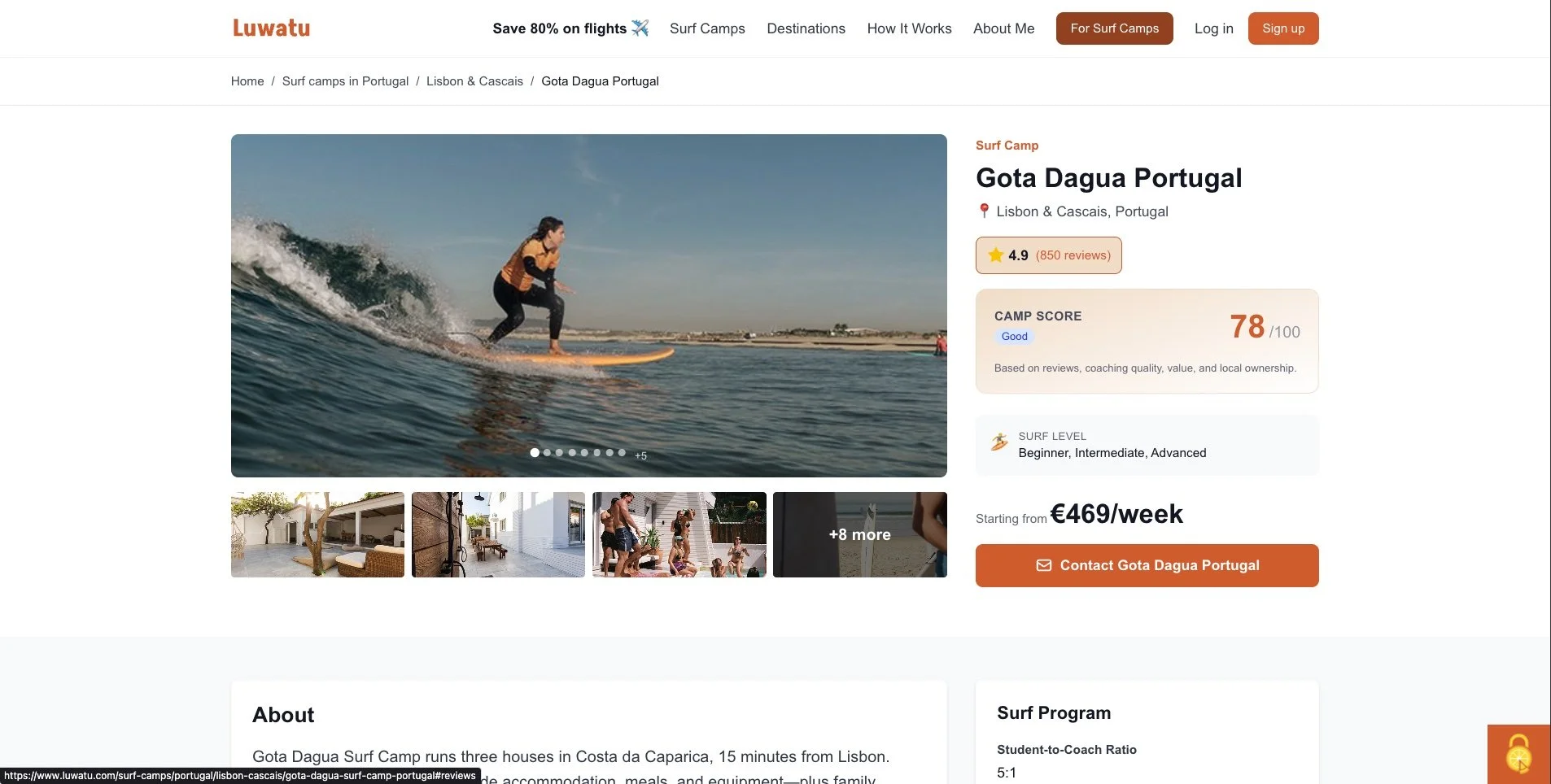
Snapshot of Luwatu’s website
Building a Global Surf Camp Platform Solo
As of May 2026, Luwatu features close to 500 surf camps worldwide.
The platform allows surfers to, search surf camps and compare options, sort listings, contact camps directly, and explore surf travel opportunities globally
What makes the story even more impressive is that Matthieu built the entire platform himself.
“Being able to build the entire platform by myself and list 500 camps worldwide” is one of the achievements he’s most proud of so far.
That level of focus matters in marketplaces
Why Luwatu Is Positioning Itself Differently
One of the strongest themes throughout the conversation was fairness.
Many large online travel agencies and booking platforms charge surf camps commissions ranging from 15% to 35% per booking. Luwatu’s goal is to operate much leaner.
Matthieu says he plans to keep fees around 5–10%, while also ensuring camps can’t simply pay to manipulate search rankings.
Instead, search visibility is intended to be based on reviews, ratings, services and user relevance. Not who spends the most money.
He’s also intentionally trying to support locally owned surf camps and independent operators by giving them stronger visibility on the platform.
Putting this all together in a way that is easy to find and for users to take advantage of is the magic sauce. “I’m also focusing on improving the user experience, both for surfers and camp owners so that every every user can use the website easily.”
The Real Challenge Isn’t Building the Platform
Interestingly, the hardest part hasn’t been the technical build. It’s getting attention.
More specifically, backlinks, SEO authority, and distribution.
“I’ve built a good platform, a good database of camps and a good base for growth,” Matthieu says. “But it’s currently sitting in the dark for Google because I haven’t built backlinks to the website.”
To change this, Matthieu is leading members of Surfpreneurs Circle to learn about backlinks and work together on building mutual links where it makes sense.
For founders building niche platforms, marketplaces, or directories, this is an important lesson.
Building the product is often only half the battle.The other half is authority, discoverability, partnerships, SEO trust, content distribution, and network effects
It’s a reminder that in modern digital businesses, distribution and relationships can matter just as much as the product itself.
When You Know the Market Deeply
One thing that stands out about Matthieu is how deeply connected he is to the problem.
“I'm still looking for surf camps on occasion, and I'm still having trouble finding which one is going to match what I'm looking for as an intermediate surfer focused on progression.".”
That level of lived experience can become a major competitive advantage.
Because founders who genuinely live inside their niche often spot gaps earlier, understand nuance better, recognise bad user experience faster, and build more authentic solutions
It’s one of the reasons many successful surf businesses are started by surfers themselves.
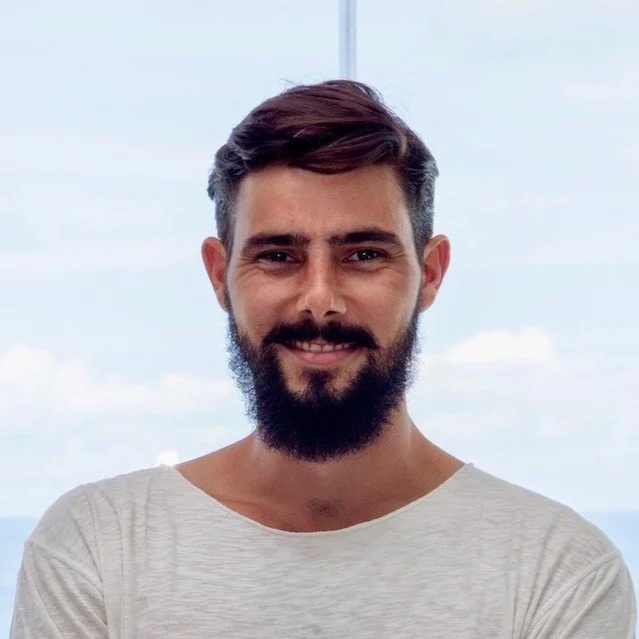
Matthieu Baillargé, Founder of Luwatu
Staying Consistent Through Doubt
Like most long-term projects, the emotional side of building Luwatu has been challenging too.
Matthieu says one of the hardest parts has been staying consistent in the face of external doubt.
“I’m 100% convinced there is an opportunity,” he says. “But life is full of challenges and at the moment I’m not able to focus 100% on the project.”
That tension will feel familiar to many founders, balancing obsession with reality.
Especially when building projects that can take years to mature in any industry, the timeline to profitability can feel uncertain. But despite the doubts, quitting has never really felt like an option.
“I’ve been either thinking or working on it for the last 10 years now,” he says.
That kind of persistence is often what separates niche founders who eventually break through.
Why Surfpreneurs Helped Restore Momentum
One of the more interesting parts of Matthieu’s story was the role community has started to play.
He describes discovering Surfpreneurs Circle as “a blessing” during a period where motivation and focus were harder to maintain. “The community is super supportive and it’s very motivating to find a group of people building in the same space as you.”
Already, collaborations are emerging — including conversations with High Tide founder Jose Peralta around potential partnership opportunities. That alignment makes sense.
Both businesses are ultimately trying to solve a similar problem, helping surf camps generate more direct bookings rather than relying heavily on expensive intermediaries. For surf founders building niche businesses, this highlights an underrated point, that community can create an advantage, both emotionally and commercially.
Lessons Learned After 10 Years Thinking About the Same Problem
After more than a decade around the idea, Matthieu has developed a few clear beliefs.
1. Trust Your Gut
“If you’re really convinced about something, you should probably trust yourself and go for it.”
2. Don’t Aim for the Middle Ground
“We tried to build something ‘in-between’ 10 years ago. It didn’t work.”
Instead, do one thing well first.
3. Stop Listening to People Who’ve Never Tried
His advice for founders is blunt “Stop listening to people who have never done what you’re trying to do.”
That mindset probably explains why the project still exists after 10 years.
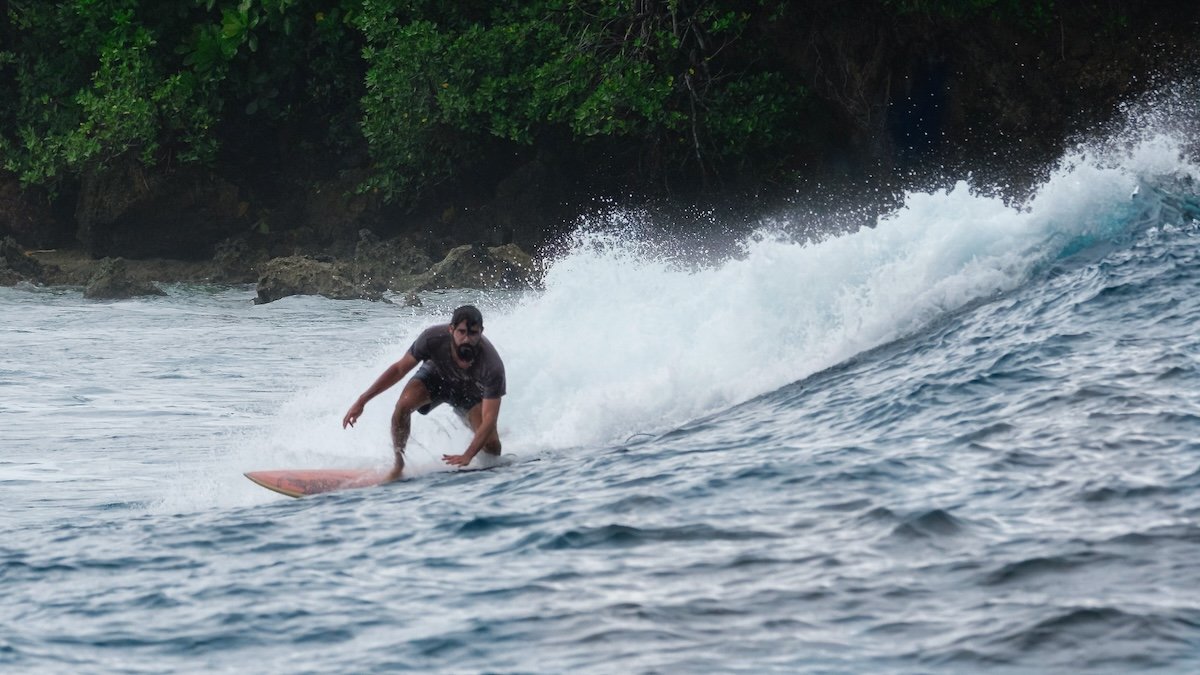
Matthieu, meditating in the ocean
Surfing, Simplicity & Mental Space
Outside of work, Matthieu says surfing has become far more than just a hobby. After moving to Biarritz, he’s surfing more than ever — and increasingly sees it as a form of meditation.
“I need that cold water shock and the silence it brings to my mind.”
His version of a good day is refreshingly simple:
time with friends and family
a good surf
meaningful work
and “no scrolling.”
That balance between focus, creativity, and ocean time feels deeply relatable for many founders in the Surfpreneurs community.
What’s Next for Luwatu?
Right now, the focus is clear. Traffic growth. Specifically through backlinks, partnerships, SEO authority, surf industry collaborations, and getting more surfers actively using the platform.
In the longer term, Matthieu is excited about seeing more booking requests sent to camps, more direct bookings, and eventually surfers actually planning and taking surf trips through the platform.
And secretly? He admits there’s still a dream sitting underneath it all. “My secret dream is to be paid to test surf camps and resorts worldwide.”
Honestly, there are worse business models to chase, and I for one am jealous I didnt come across this one earlier.
Connect With Matthieu & Luwatu
🌍Find your next surf camp on Luwatu
If you’re building something in the surf, travel, lifestyle, or outdoor industry and want to connect with other founders navigating similar challenges, join the conversation at Surfpreneurs Club.