
Surfing First, Business Second: 20 Years Building Padang Padang Surf Camp in Bali
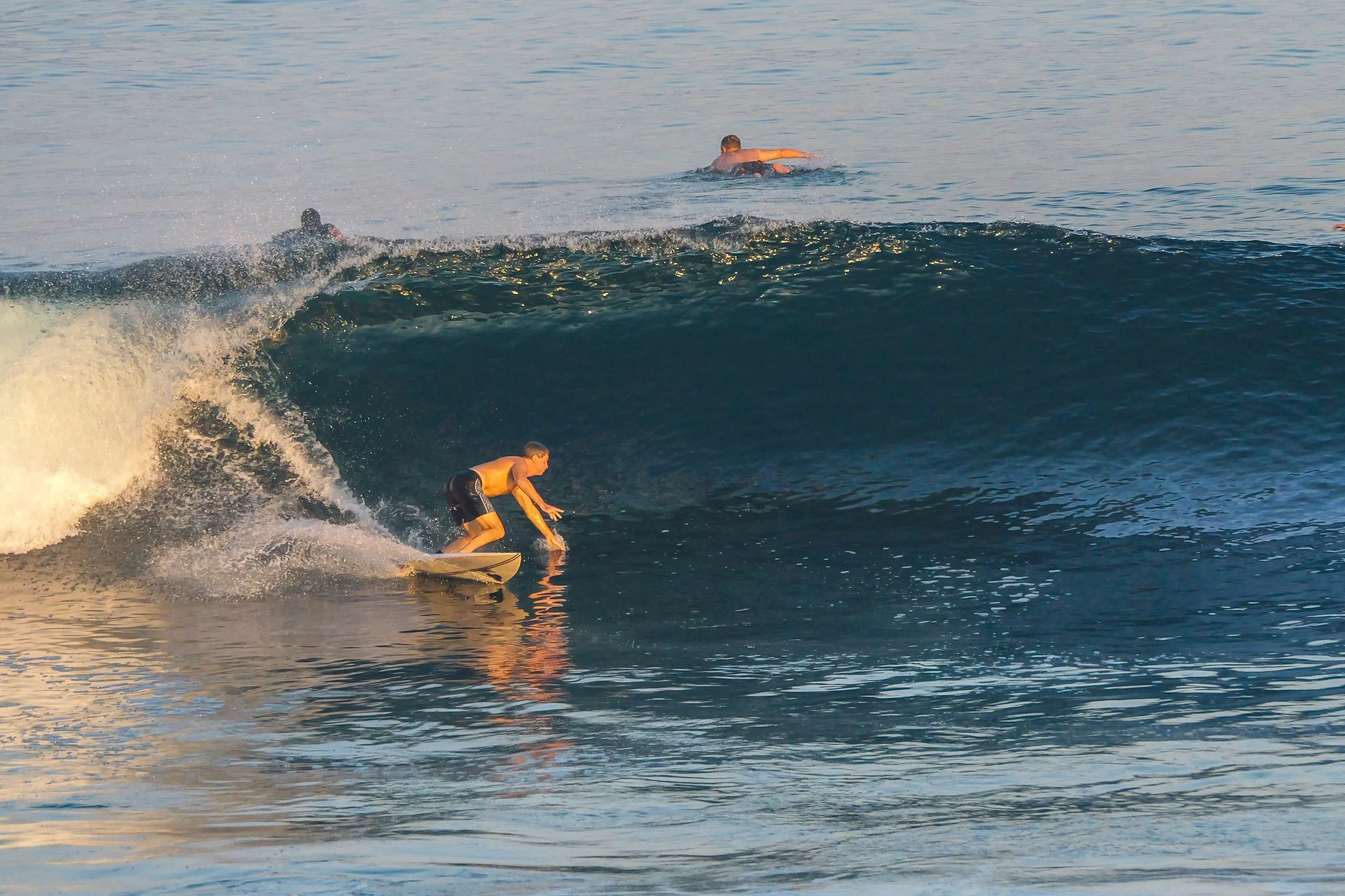
Andrew at Uluwatu
For many founders, success means growth: more customers, more staff, more locations and bigger revenue. Andrew Roberts has spent more than 20 years building a successful surf business in Bali with almost the opposite ambition.
He doesn't want to open another location. He doesn't want to keep adding rooms. And when asked what he is working on next, his answer isn't a new product, expansion plan or growth target. It's improving his surfing.
Andrew founded Padang Padang Surf Camp in Bali in 2005, swapping a career in computer programming and IT for a life built around surfing. What began with eight rooms has grown modestly to 13, while the business has increasingly focused on surf coaching, video analysis and helping everyday surfers progress.
Along the way, Andrew has learned plenty about building a business from zero, training people properly, developing systems, communicating across cultures and knowing when not to grow.
From computer programming to a surf camp in Bali
Andrew's background couldn't have been much further from running a surf camp. During the 1990s, he worked in computer programming and was a strategic business partner to a large Asia-Pacific and European trading company, looking after its core IT system.
Following the Asian Financial Crisis in 1997, however, the company's business began to contract. At the same time, the software systems Andrew had helped build became more mature and stable. For an ambitious entrepreneur, there was less left to build.
The idea for a very different life arrived during a trip to Costa Rica in the early 2000s. Andrew had travelled there to stay at a surf camp. He remembers walking out of the airport dressed in a suit and being collected by the surf camp owner dressed in shorts and a singlet. The contrast stuck with him. Andrew loved surfing. He loved the tropics. And suddenly a lifestyle built around both looked possible.
“I thought, this is the life for me.” There wasn't a detailed business plan behind what happened next.
“I loved surfing and Bali and wanted a surfing Bali lifestyle,” Andrew says. “No business plan or projections. Just do it!”
In 2005, Padang Padang Surf Camp was born.
Starting a surf business from zero
Starting with a blank sheet of paper sounds liberating. In reality, Andrew found it considerably harder than expected. There were no experienced staff to inherit, no standard operating procedures and no existing systems to follow. Everything had to be created and that meant training surf instructors, developing a food menu, establishing processes, learning how to operate in another culture and solving the constant stream of small problems that come with building a hospitality and surf business from scratch.
“Starting from zero was the biggest challenge,” Andrew says.
It's a distinction he believes founders sometimes underestimate. Joining or buying an established business means inheriting years of organisational knowledge. A brand-new business has none of that. You have to create it as you go. One early assumption proved particularly important. Andrew initially believed that good surfers would naturally make good surf instructors. They didn't.
“Being able to do something and being able to teach it are two quite different skills.”
It became an important lesson in the difference between technical ability and the ability to transfer that knowledge to somebody else.
Padang Padang Surf Camp eventually brought in experienced specialists who understood how to run surf coaching training programmes. Together they developed teaching procedures and processes for the instructors. More than two decades later, many of those foundations are still being used.
Why great surfers don't automatically make great coaches
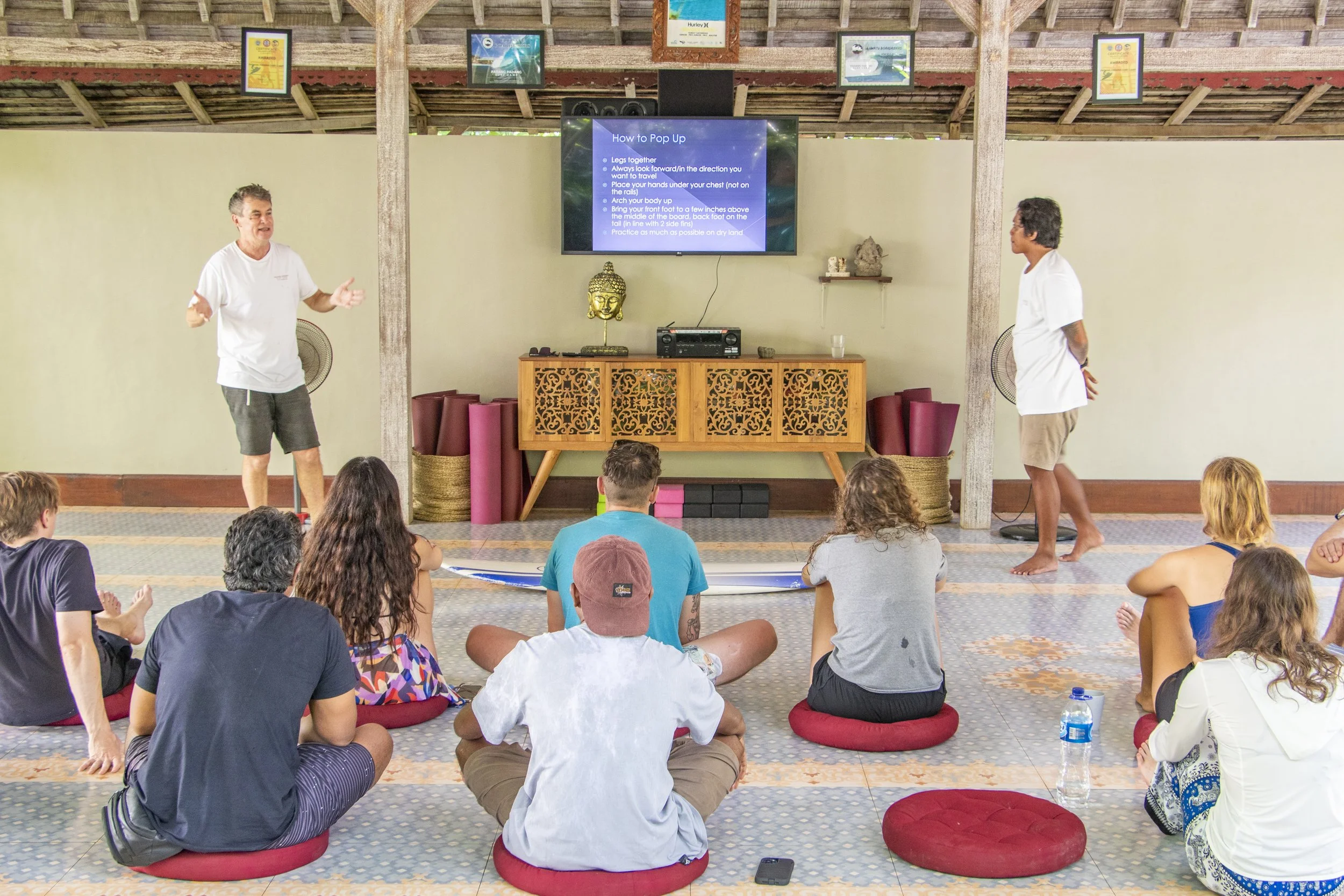
Surfing Fundamentals at Padang Padang Surf Camp
The experience influenced one of Andrew's strongest beliefs about running a business: people need the right skills for the job, and where those skills are missing, they need proper training. It's advice that applies well beyond surf instruction.
A talented designer isn't automatically a good manager. A great salesperson isn't automatically able to train a sales team. And somebody who instinctively understands their craft may struggle to explain it to a beginner.
Andrew's advice is simple: Don't put people into roles they aren't qualified for without giving them the training required to succeed. That also means recognising your own gaps as a founder.
“You need to be excellent at so many areas — communication, accounting, digital marketing, salesmanship, customer relationships,” Andrew says. “Hire good people to fill in the gaps where you are not highly competent.”
Building better, rather than bigger
Padang Padang Surf Camp started with eight rooms in 2005 and increased to 13 rooms around 2011. And that is where Andrew would like it to stay.
“We have never wanted to grow or expand,” he says. “That is the limit of our ambition.”
It's a refreshing perspective in a business world where growth is often treated as an objective in its own right. For Andrew, the goal isn't to build more surf camps. It is to make the existing experience better and continue enjoying life in Bali.
Today the camp focuses heavily on surf coaching and surf progression, particularly for professional people who may have limited surfing experience but are motivated to improve. Video review has become an important teaching tool, alongside a structured coaching programme and a growing library of surfing tutorials the business has created for YouTube. The camp has also deliberately positioned itself differently from Bali's party-oriented surf camp market. Accommodation is entirely in private rooms rather than dormitories, and the experience is centred much more strongly around surfing and progression.
The aim is straightforward: help people become better surfers.
The surprisingly successful addition: a surf skate park
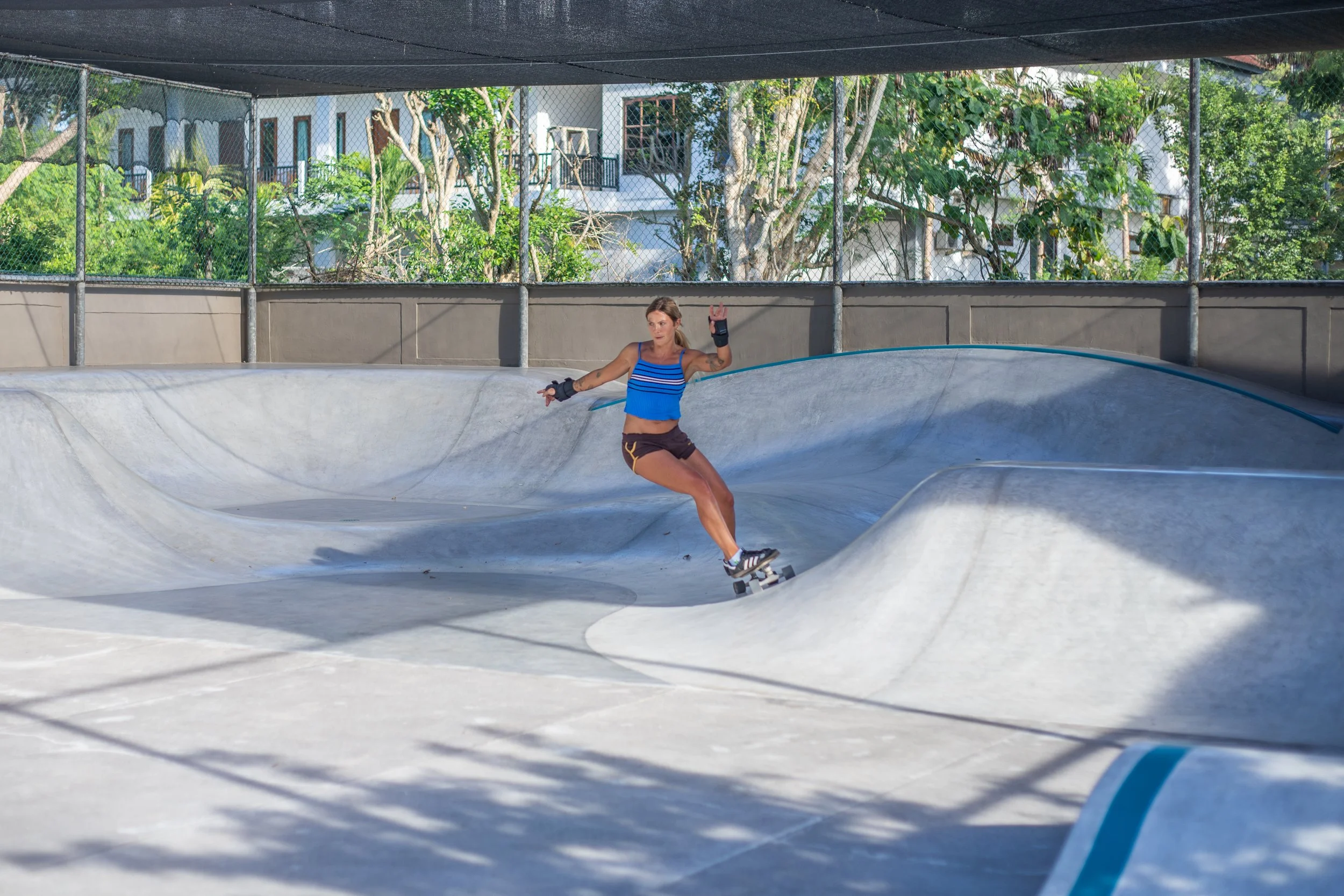
The new surf skate park at Padang Padang Surf Camp
Improvement doesn't have to mean expansion. One of Padang Padang Surf Camp's most successful recent investments demonstrates that. The property previously had a tennis court that received relatively little use. More recently, the team replaced it with a surf skate park. Customer participation exceeded Andrew's expectations. Even more importantly, surf skating has proved useful as a coaching tool, helping guests practise movement patterns and techniques that transfer back into the water. The camp has also added a sauna and ice bath during the past year.
These aren't steps towards turning Padang Padang into a bigger operation. They are ways of making the existing product stronger for the people already coming through the door. It's a useful distinction for founders. Growth doesn't always have to mean more. Sometimes it means making the experience and proposition you already provide considerably better.
Customer satisfaction is the win
Ask Andrew about a recent business achievement he is particularly proud of and he pushes back slightly against the premise of the question.
“Every happy customer is a win we are proud of,” he says. “It is all about customer satisfaction and being outward looking, not inward self-praising.”
After two decades in business, that customer orientation remains central. Rather than focusing primarily on awards, expansion or internal milestones, success is measured by whether guests leave having enjoyed themselves and improved their surfing. That philosophy also helps explain why Andrew hasn't felt the need to continually grow the business. If the goal is delivering a great experience rather than building the biggest possible company, the decisions you make can look very different.
The business lessons from 20 years in Bali
Looking back, Andrew highlights a handful of lessons that have mattered most.
Communication comes first.
Running a business involving international customers and a multicultural team makes clear communication particularly important. That becomes even more critical when English isn't everybody's first language.
Assumptions and poorly communicated expectations can quickly turn into operational problems.
Being well capitalised makes life easier.
Starting and operating a business inevitably involves surprises. Having sufficient capital gives a founder far more room to solve problems properly rather than constantly making decisions based on immediate cash constraints.
Good people need good systems.
Hiring good staff matters, but Andrew's experience with surf instructors also taught him that people need clear procedures and effective training. Strong people and strong systems reinforce each other.
And finally:
Mistakes are part of becoming capable.
Asked what he would change if starting again, Andrew's answer is:
“Nothing. You learn by your mistakes and if you don't make mistakes you don't learn. Learning from mistakes is what makes a businessman capable.”
Using AI, SEO and digital tools in an established surf business
Despite running a business centred around surfing and face-to-face coaching, Andrew's technology background hasn't disappeared. Google remains Padang Padang Surf Camp's most important marketing channel, making search visibility particularly valuable. WordPress remains a core tool for the business, while Andrew now uses Claude extensively.
His advice for other operators is to first make sure their product or service reflects what the market actually wants, then build their digital presence around it.
Depending on the business, he sees SEO as particularly important and believes large language models can now be used extensively across areas ranging from search optimisation to accounting and business processes. The tools have changed considerably since Padang Padang Surf Camp started in 2005. The underlying priority hasn't: build something customers genuinely value.
When surfing is the lifestyle
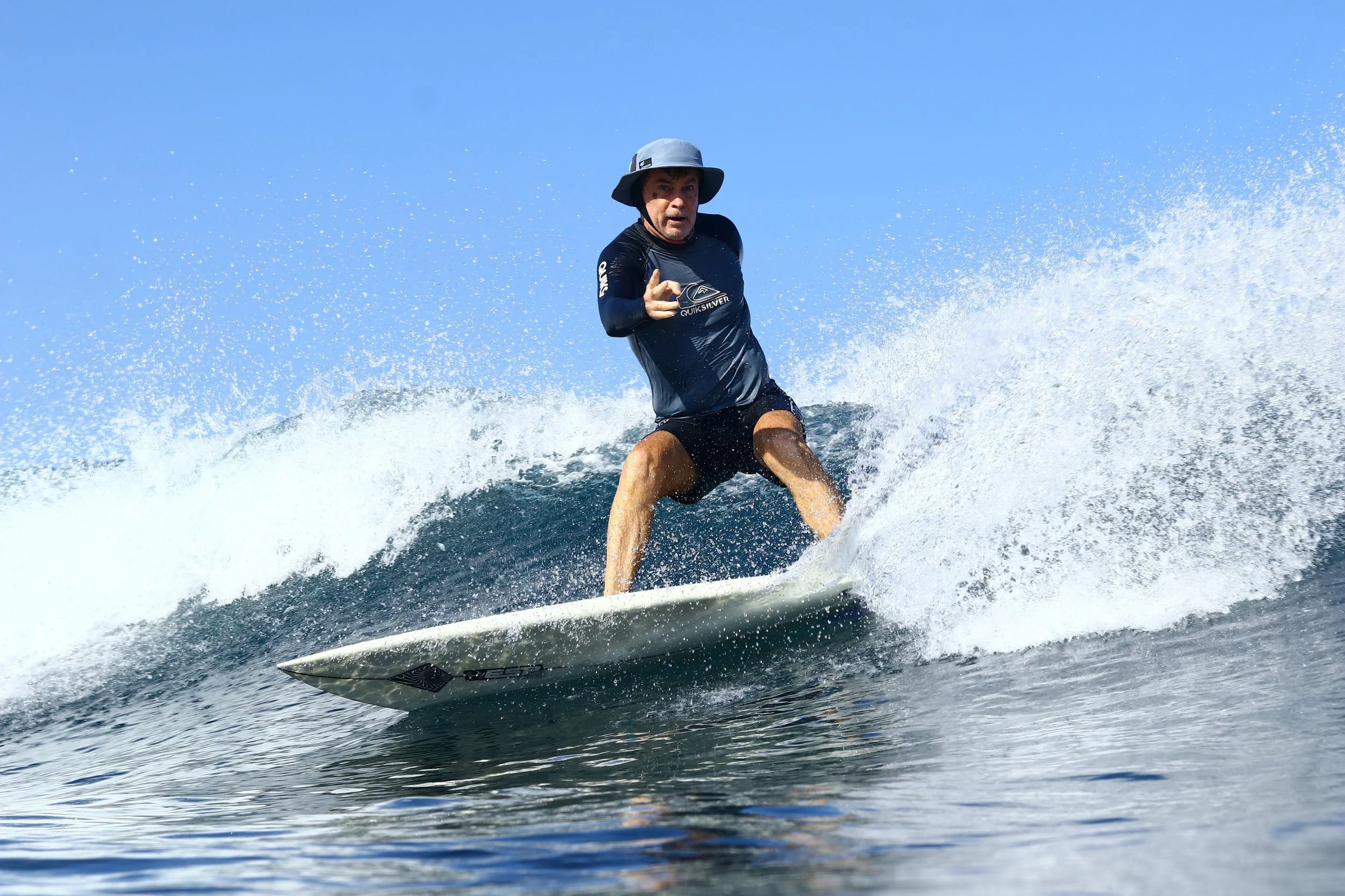
Andrew Roberts living his lifestyle
The question of work-life balance gets a similarly straightforward response from Andrew. Surfing comes first. It always has.
“There is no such thing as a lifestyle balance when your life is about surfing and business. I always have and always will put surfing first, then do whatever I need or want to do after that.”
His definition of a good day reflects that philosophy:
“A few great waves at Uluwatu, then the rest of the day takes care of itself.”
More than 20 years after deciding he wanted the life of the surf camp owner who collected him from that Costa Rican airport, Andrew has largely built exactly that. And perhaps most unusually, he isn't searching for the next thing. Asked what kind of connections he is looking for or what his ambition is for the future, Andrew says:
“My ambition is for nothing to change.”
For the next few months, that means surfing Bali before swapping boards and heading to Japan, the USA and Europe for a winter of snowboarding, then returning to Bali for another surf season.
Andrew's advice for other Surfpreneurs
After more than two decades building and operating a surf business, Andrew's closing advice is characteristically direct:
Work hard.
Train people properly.
Believe in yourself and your goals.
And don't underestimate what building a successful business actually requires.
“The secret to success is hard work, discipline and dedication.”
In a world of growth hacks, fundraising announcements and constant pressure to scale, there might also be another lesson in Andrew's story. Know what you actually want the business to give you. Then build for that. For Andrew Roberts, the goal was never to build the biggest surf camp in Bali. It was to build a life where surfing could come first.
Twenty years later, that's still the plan.
Connect with Andrew and Padang Padang Surf Camp
Andrew Roberts founded Padang Padang Surf Camp in Pecatu, Bali, in 2005. The camp specialises in surf coaching and progression, combining in-water coaching with video analysis, surf skating and structured surf instruction.
Find out more about Andrew and Padang Padang Surf Camp at https://www.balisurfingcamp.com